Navigating Workplace Politics with Court Cards in Career Tarot
It's 2:14 AM. The blue glare of your phone lights up the dark bedroom ceiling. Your chest feels tight thinking about tomorrow's 9:00 AM department sync. During this afternoon's presentation, your director turned his chair toward the window while you broke down the quarterly metrics. Meanwhile, your senior colleague jumped in to explain your own slide to the VP. You left the conference room feeling small and confused.
Screen lights won't give you answers. When workplace signals cross and emails feel like landmines, sitting at a desk with a physical deck cuts through the noise. Shuffling heavy, 350gsm matte cards between your palms brings immediate sensory grounding. Laying physical cards on a clear wooden surface forces your racing brain to slow down and observe reality, separate from corporate anxiety.
Using tarot for work environment issues isn't about fortune-telling. It gives you an objective mirror to analyze tarot office politics without letting panic take over.
Mapping Office Roles to Court Card Ranks
Court cards show up constantly when you perform a tarot reading for job environment struggles. Sixteen cards feature specific human archetypes. Matching these ranks to your company's hierarchy helps clear the fog.
- Pages: Entry-level staff, interns, or incoming communications. A Page brings news, fresh skill sets, or sudden project requests. If you pull a Page, look at who recently joined your pod or what new assignment landed in your inbox.
- Knights: Individual contributors, project leads, or fast movers. Knights act quickly. Sometimes they sprint toward targets with reckless ambition, ignoring team morale in favor of immediate speed.
- Queens: Team managers, department anchors, or strategic mentors. Queens hold internal authority. They manage team climate, protect resources, and decide who gets access to key decision-makers.
- Kings: Executives, founders, and division directors. Kings set policy and approve budgets. Their influence is systemic, structural, and rarely negotiable.
Translating Suits into Corporate Dynamics
Ranks give you the position. Suits tell you the behavior pattern. When relying on tarot for career guidance, suit alignment shows how colleagues operate under pressure.
Wands: Innovation and Burnout. Wands represent drive, pitch meetings, and initiative. A Knight of Wands in your team card position points to a peer rushing out new initiatives without building infrastructure. They start fire after fire, leaving you to clean up the mess.
Swords: Communication, Strategy, and Conflict. Swords rule emails, performance reviews, and contract terms. The King of Swords cold-cuts through emotional talk with raw data. Expect direct feedback, lean budgets, and zero patience for excuses. However, inverted or troubled Swords cards signal backstabbing, rumor mills, and hidden agendas.
Cups: Workplace Culture and Emotional Alliances. Cups govern team spirit, coffee breaks, and personal dynamics. A Queen of Cups acts as the empathetic team member everyone confides in during restructuring. Watch out when Cups turn toxic; warm smiles can mask deep factional loyalty.
Pentacles: Operations, Budgeting, and Security. Pentacles deal with practical reality: compensation, headcounts, physical workspace, and deliverables. The Page of Pentacles signals a reliable worker willing to learn the quiet, unglamourous tasks that keep operations stable.

Simple Career Tarot Spreads for Workplace Power Dynamics
When anxiety sets in before a Monday status call, complex twelve-card layouts only confuse matters further. Keep your spread focused. Using targeted career tarot spreads brings immediate clarity to workplace tensions.
Clear your desk. Cut the pack three times with your non-dominant hand. Pull three cards from left to right using this layout:
- Card 1: Your Current Stance. How you operate in the team structure right now.
- Card 2: The Hidden Dynamic. The unseen motive, colleague influence, or political shift affecting your standing.
- Card 3: Tactical Advice. How to handle the situation using strong professional boundaries.
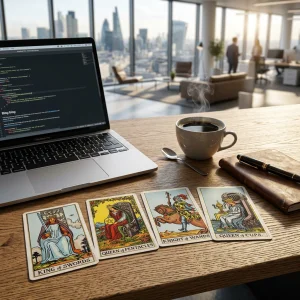
Imagine pulling the Queen of Pentacles in Position 1, the Knight of Swords in Position 2, and the King of Wands in Position 3. You are focusing on high-quality work and steady output. However, an aggressive colleague is pitching hasty strategies straight to senior leadership. Your best move is channeling the King of Wands by stepping up with a clear, authoritative vision that reframes their chaotic pitch into a realistic roadmap.
What if I draw a court card and can't figure out which coworker it refers to?
Focus on the behavior pattern rather than searching for a specific face. Look at how that card handles power, deadlines, or communication in your daily workflow. Sometimes the card reflects a side of yourself you're projecting onto the team, or a shifting corporate policy rather than one specific colleague.
Can a single court card show whether a toxic team member is sincere about fixing things?
Tarot captures the current energetic trajectory, not a permanent personality sentence. A card like the Knight of Cups might signal someone extending a genuine peace offering today, but their long-term habits depend on personal accountability. Use the card to guide your immediate professional boundaries while letting their real-world actions prove sincerity over time.
Is pulling cards for workplace stress worth trying if I am already feeling overwhelmed?
Setting aside five minutes to pull cards forces you to stop compulsively checking emails and step back from reactive panic. The physical act of handling heavy cardstock provides quiet mental space to organize your thoughts, helping you walk into morning meetings with clear boundaries instead of raw emotion.