How to Read Tarot Cards for Deep-Seated Family Conflicts
You're wide awake at 2:14 AM. The blue glare of your phone illuminates a text message your sister sent six hours ago: "Fine. Do whatever you want." Five little words loaded with twenty years of silent treatment, passive-aggressive side-eyes, and disputed Thanksgiving serving dishes. You roll onto your back, glaring at the ceiling fan as it clicks rhythmically. Your pulse is racing. Your brain is busy rehearsing sharp comebacks you should have delivered back in 2018.
Family arguments hit different. They bypass your logical brain and wake up your inner ten-year-old. When bloodlines get messy, standard self-help advice like "just communicate clearly" feels completely useless. You need a circuit breaker. You need something tangible you can touch, shuffle, and examine to pull your mind out of a defensive spiral.

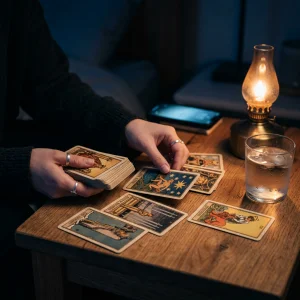
Reach over to your nightstand. Slide the heavy lid off your deck. The thick, matte cardstock of a solid 350gsm deck gives your fidgeting hands an immediate task. As you slide the cards through your fingers, the rhythmic shuffle sound interrupts the mental noise. Taking a physical object in hand anchors your focus in the room. It stops you from drafting angry text messages you will regret by sunrise.
Step 1: Cool Your Nervous System Before Touching the Cards
Never pull cards while your face is still hot from a fight. If your adrenaline is spiking, you will just read your own panic into every image. Pulling the Three of Swords when you're furious will only make you think, "Ha! I knew she hated me!"
Give yourself a strict twenty-minute buffer. Set a timer. Drink a full glass of cold water. Put your deck on the table in front of you without drawing anything yet. Place both hands flat on the outer box. Feel the cool paper texture. Take three slow breaths.
Approaching healing family trauma tarot spreads requires an honest mindset. You aren't asking the cards to validate your anger or predict when your cousin will finally apologize. You are using the imagery to spot your own blind spots and figure out where to draw the line.
Step 2: The 4-Card Family Conflict Spread
Clear off a clean spot on your table. Shuffle the deck until your hands relax. When you feel ready, lay out four cards horizontally from left to right.
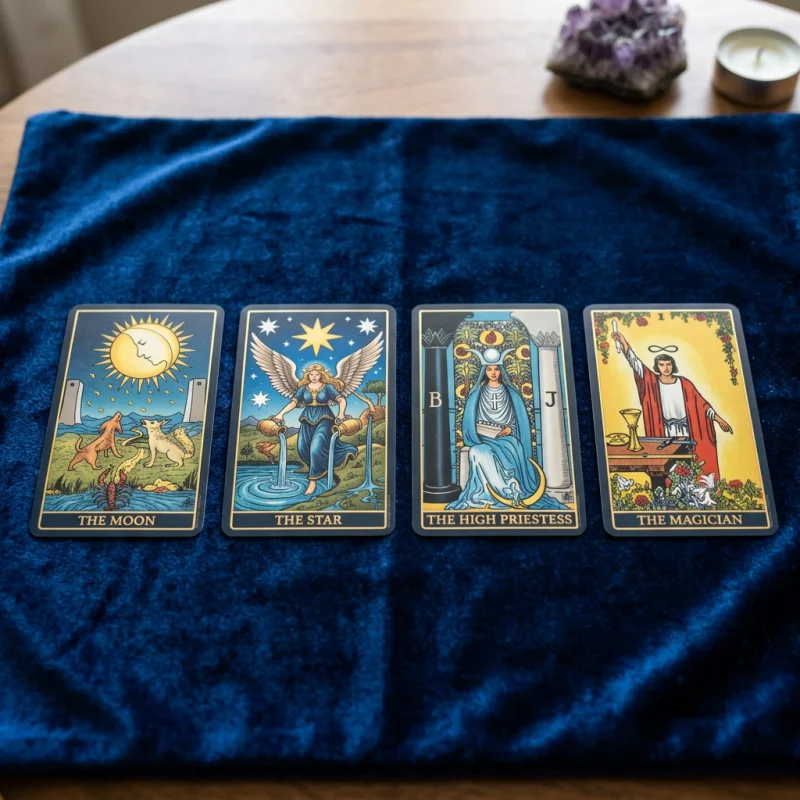
Card 1: Your Raw Nerve. This position reveals what old button is being pushed. It usually points to a childhood dynamic rather than the current argument over Sunday dinner. If you pull the Five of Pentacles here, the fight isn't about money; it's about your old fear of being left out.
Card 2: Their Noise. This card represents the other person's hidden stress or emotional clutter. They might be acting like a tyrant, but pulling the Nine of Swords here shows they are driven by overwhelming anxiety. It doesn't excuse their behavior. It just strips away the monster mask so you can see a flawed human.
Card 3: The Trapped Loop. When working with tarot for toxic family relationships, this spot exposes the script you both keep reading from. Are you playing the strict parent while they play the rebellious teenager? Identify the pattern so you can stop stepping into your assigned role.
Card 4: The Micro-Action. This is your practical step forward. The Two of Swords tells you to stop responding to bait texts immediately. The Temperance card suggests lowering your voice by three decibels. The Seven of Boundaries—or the Nine of Wands—reminds you that leaving brunch at 2:00 PM sharp is a valid choice.
Step 3: Translating Card Pulls Into Real-World Boundaries
Cards mean nothing if you put them back in the box and go right back to arguing in the family group chat. A successful tarot reading for family peace gives you a concrete exit strategy from unnecessary drama.
Say you pulled the Hermit for your micro-action. That isn't a vague call for spiritual isolation. It means you turn off read-receipts on your phone. It means when your uncle starts baiting you about your career choices, you smile, pick up your plate, and walk to the kitchen to wash a fork.
You cannot force a relative to go to therapy, process their past, or speak to you with respect. You can only control your own presence in the room. The physical cards serve as a reminder that you are an adult with options, not a trapped kid at a dinner table.
What if I do a reading and realize my family member has zero intention of changing?
That is actually a breakthrough. Realizing someone won't change frees you from the exhausting job of trying to fix them. The cards help you shift focus from changing their behavior to protecting your own peace. You can lower your expectations, shorten your visits, and stop bringing sensitive topics to people who use them as ammunition.
Is it better to pull cards right after an argument or wait a few days?
Wait until your physical body calms down. Pulling cards while your heart is pounding usually leads to dramatic, defensive interpretations. Give it a day or two. Once you can think about the situation without clenching your jaw, sit down with your deck to get clear, actionable insights.
Is it worth doing a reading if I am the only person trying to fix things?
Yes. You don't need two people to change a dynamic. When one person stops playing their assigned role in a family loop, the whole dynamic shifts. Reading cards gives you clarity on your own choices, helping you stay grounded even if everyone else continues acting out old drama.